
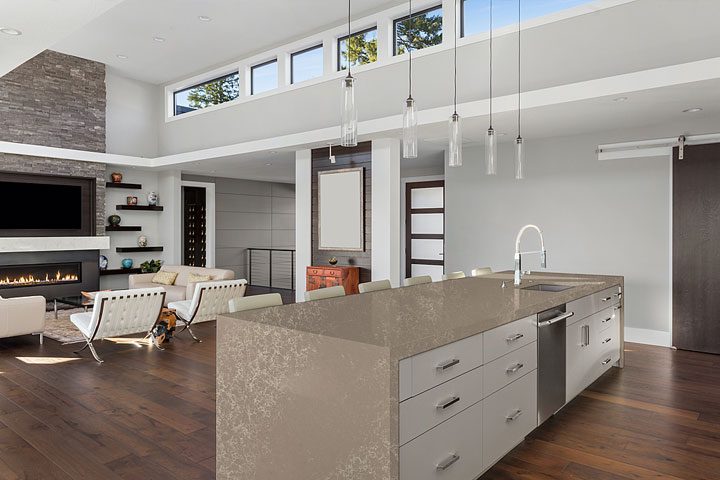
Choosing a countertop is about more than finding an attractive color. The right surface should support everyday use, complement the surrounding design, and remain practical over time. HanStone Quartz offers a combination of natural quartz content, durable performance, low maintenance, and contemporary design options that make it worth considering for kitchens, bathrooms, hospitality environments, offices, and other interior spaces. Hyundai L&C provides HanStone Quartz surfaces designed to bring together material performance and refined aesthetics.
For homeowners and design professionals, understanding what makes quartz suitable for a project can make the selection process much easier.
What Makes Quartz a Practical Surface Material?
Quartz countertops have become a popular alternative to several traditional surface materials because they balance appearance with everyday functionality. Natural quartz is one of the hardest minerals found in nature, giving engineered quartz surfaces a strong foundation for demanding interior applications.
Unlike natural stone, quartz surfacing is manufactured by combining quartz with resins, pigments, and other components. This manufacturing process allows designers to achieve consistent patterns, colors, and surface characteristics while maintaining the visual appeal associated with stone.
For busy spaces, that consistency matters. A countertop should not only look good when it is first installed. It should also work effectively within the daily routines of the people using it.
Key considerations include:
- Resistance to common stains and scratches
- A nonporous surface that does not require sealing
- Low-maintenance everyday care
- A wide selection of colors and patterns
- Options suitable for residential and commercial applications
- Compatibility with different edge profiles and fabrication requirements
These qualities make quartz a practical material for projects where aesthetics and usability need to work together.
Why HanStone Quartz Works Across Different Design Styles
One of the challenges of selecting a countertop is finding a material that supports the overall design rather than competing with it. A surface may become a subtle background element or serve as the visual focal point of a room.
HanStone Quartz provides a broad design palette that can accommodate both approaches. Its collection includes surfaces inspired by natural stone, with options ranging from understated colors to designs featuring more noticeable movement and veining.
This versatility makes quartz suitable for several interior design directions, including:
- Contemporary interiors: Soft neutrals and streamlined patterns can complement clean cabinetry and simple hardware.
- Classic kitchens: Marble-inspired quartz can introduce a traditional stone appearance without requiring the same level of routine maintenance associated with some natural stones.
- Warm modern spaces: Earth-inspired tones can work with natural wood, textured finishes, and warmer palettes.
- Commercial interiors: Durable surfaces can provide a polished appearance in reception desks, conference tables, food preparation areas, and other high-use environments.
The goal is not simply to select a popular countertop color. Instead, consider how the surface interacts with cabinetry, flooring, wall finishes, lighting, and hardware.
HanStone Quartz Design Starts With the Right Sample
Digital images can help narrow down countertop choices, but they should not be the final decision-making tool. Screens can change how a color, pattern, or veining appears.
A physical sample provides a more reliable reference.
Place the sample near the cabinetry and flooring. Look at it under natural daylight as well as the room’s artificial lighting. If possible, view it at different times of day.
Pay attention to the undertones, too. A white quartz surface may have warm, cool, gray, or creamy characteristics that become more noticeable when placed beside other materials.
The official buying process recommends selecting a product, ordering a sample, and then working with a dealer for measurements, edge profiles, pricing, and installation.
This approach can reduce design surprises before fabrication begins.
Consider More Than Color When Selecting Quartz
A beautiful countertop still needs to meet the practical demands of its environment. Before making a final selection, evaluate the project from several angles.
1. Think About Daily Use
Consider what will happen on the surface every day. A family kitchen, bathroom vanity, restaurant, office, or reception area may have very different performance requirements.
2. Review Surface Characteristics
Look at characteristics such as stain resistance, scratch resistance, heat resistance, nonporosity, and maintenance requirements. HanStone Quartz is presented as a low-maintenance, nonporous surface with resistance to stains, scratches, etching, and heat.
3. Examine Slab Dimensions
Countertop planning involves more than calculating square footage. Slab dimensions, thickness, seams, cutouts, and layout can affect fabrication and installation.
Available slab specifications can vary by product and color, so confirm current product information before final planning.
4. Plan the Edge Profile
The edge profile can influence how substantial, traditional, or streamlined a countertop looks. It should complement the design while also fitting the fabrication requirements of the selected surface.
5. Discuss Installation Early
Measurements and fabrication details should be addressed before ordering. Working with an experienced dealer and fabricator can help coordinate measurements, edge details, cutouts, and installation requirements.
Where Quartz Can Be Used Beyond Kitchen Countertops
Quartz is often associated with kitchen islands and countertops, but its applications extend further. Architectural references for HanStone Quartz identify residential uses such as bathroom vanity tops, shower surrounds, table tops, fireplace surrounds, window sills, wall coverings, and thresholds. Commercial applications include conference tables, reception and desktop surfaces, countertops, credenzas, interior walls, food preparation areas, and laboratories.
This wider range of applications creates opportunities for material continuity.
For example, a designer may use a coordinated quartz surface across a kitchen island and bathroom vanity. In a commercial setting, the same design language can carry from reception areas into work surfaces or other prominent architectural features.
Using related surfaces throughout a project can create visual cohesion without making every room identical.
A Smarter Way to Plan a Quartz Countertop Project
A successful countertop project begins before fabrication. A simple planning sequence can help homeowners, contractors, architects, and designers make more informed decisions.
Start with the design. Determine the overall style, color direction, cabinetry, flooring, and lighting before narrowing down specific quartz options.
Order a physical sample. Compare the sample against surrounding finishes in the actual space.
Review technical details. Confirm slab dimensions, thickness, finish, edge profiles, and fabrication considerations.
Discuss the project with a dealer. Professional guidance can help confirm measurements, pricing, installation requirements, and product availability.
Think about long-term maintenance. Choose a surface that fits the way the space will actually be used rather than selecting solely according to appearance.
This process shifts the focus from choosing a countertop based on a photograph to selecting a surface based on real project requirements.
Why Low Maintenance Matters Over Time
Countertops are among the most frequently used surfaces in many homes and commercial spaces. Spills, food preparation, cleaning, heat, and regular contact can quickly reveal whether a material is suited to its environment.
A low-maintenance surface can simplify everyday care. HanStone Quartz is described as nonporous and does not require sealing or polishing, while its surface characteristics are designed to support routine use.
That can be particularly useful for people who want the appearance of stone without adding sealing to their regular maintenance routine.
Still, proper care remains important. Following the manufacturer’s care and maintenance guidance is the best way to protect the surface and understand appropriate cleaning practices.
Looking Beyond Trends When Choosing Quartz
Interior design trends change, but countertops are not typically replaced as frequently as decorative accessories. A surface that looks current today should also make sense several years from now.
Rather than selecting a quartz design solely because it is trending, consider whether it works with the room’s permanent features. Cabinetry, flooring, architectural details, and overall layout should remain compatible with the surface.
The strongest choices usually balance current style with lasting appeal.
That does not mean choosing something plain. Natural-inspired movement, subtle veining, warm neutrals, and distinctive patterns can all create visual interest while remaining adaptable to future design changes.
Make the Countertop Decision More Informed
A countertop can influence both the appearance and functionality of an interior, so material selection deserves careful attention. Hyundai L&C’s HanStone Quartz combines quartz-based construction with a broad design selection and performance characteristics suited to everyday residential and commercial environments.
The best approach is to evaluate the entire project rather than choosing a surface based on color alone. Review physical samples, consider lighting and surrounding finishes, confirm technical specifications, and discuss fabrication and installation requirements before moving forward.
When aesthetics, performance, maintenance, and project requirements are considered together, HanStone Quartz can become more than a countertop choice. It can become a durable and cohesive part of the overall design.