
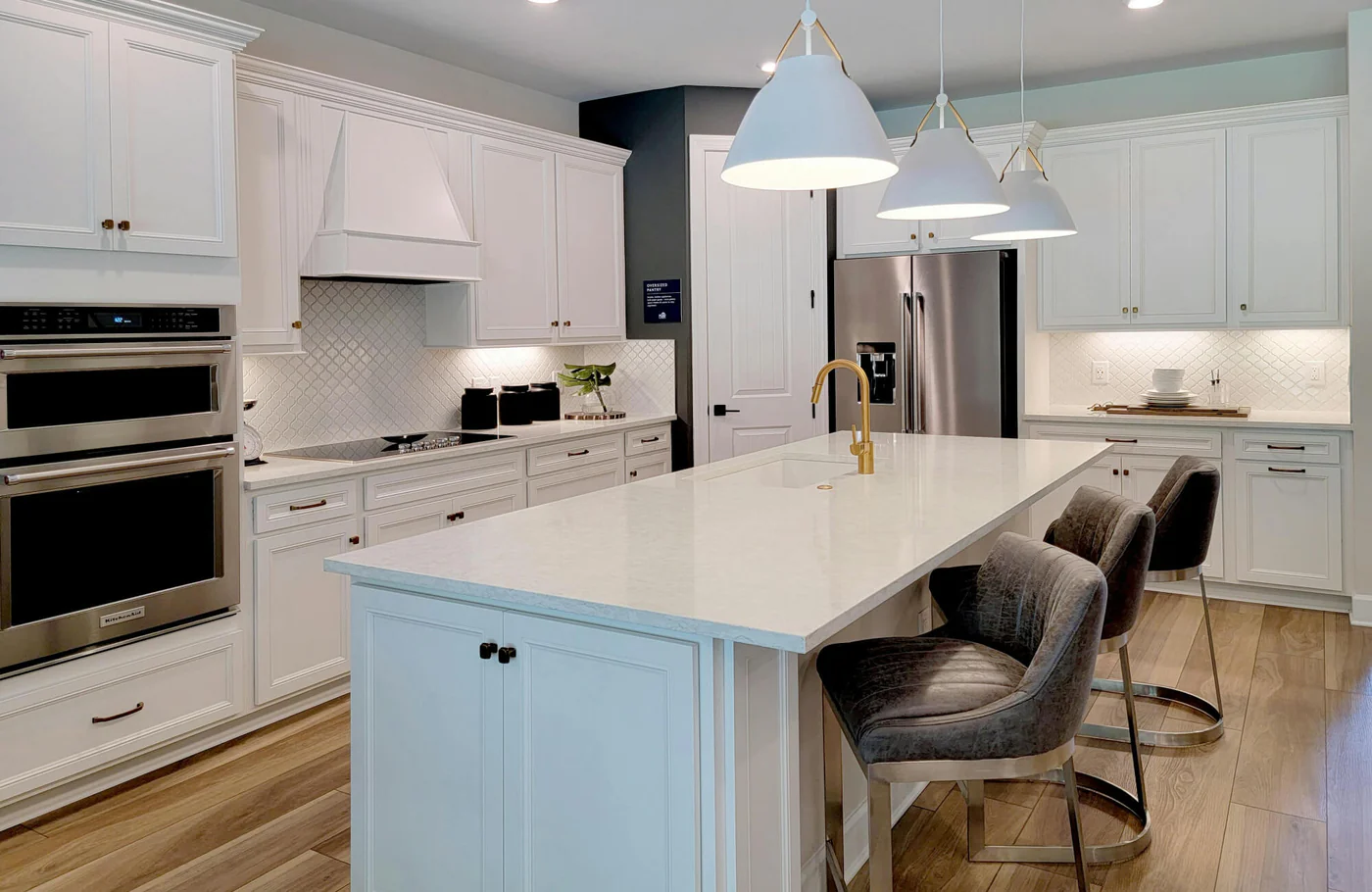
A kitchen pendant can make the whole room feel planned, or it can expose every awkward choice around it. A ceiling medallion adds shape, depth, and polish, but only when it works with the fixture instead of fighting for attention. In many U.S. homes, especially older colonials, farmhouses, townhouses, and renovated ranch houses, the ceiling plane is plain while the lighting is asked to carry the style of the entire kitchen. That is a lot of pressure for one hanging fixture. The better move is to treat the pendant, canopy, medallion, ceiling height, island size, and cabinet style as one visual decision. When homeowners compare finishes, fixture sizes, and home improvement planning resources before buying, the final result feels less like a weekend add-on and more like part of the original kitchen design. The trick is restraint. A medallion should frame the pendant, not announce itself like a crown over a diner table. Done right, the pairing gives the kitchen a finished center point without making the ceiling look busy.
Getting the Ceiling Medallion and Pendant Scale Right
Scale is where most kitchen lighting mistakes begin. People often fall in love with a fixture in a showroom or online photo, then forget that their own ceiling height, island length, cabinet mass, and sightlines are different. A good pairing starts with proportion before style, because even the prettiest fixture looks wrong when the size relationship feels off.
How Big Should a Kitchen Pendant Medallion Be?
The medallion should feel slightly wider than the pendant canopy but smaller than the full visual spread of the light. That balance keeps the eye moving from ceiling to fixture without creating a heavy circle that competes with the shade. In a typical American kitchen with an 8- or 9-foot ceiling, a modest medallion often works better than an ornate oversized one.
A common mistake is treating the medallion like a ceiling centerpiece instead of a transition piece. Over an island, the fixture already has a strong role because it hangs in the room’s sightline. If the medallion becomes too large, the kitchen starts to feel top-heavy, especially when upper cabinets, crown molding, and range hood trim already add detail.
A better test is simple. Stand at the kitchen entrance and look toward the island, not straight up at the ceiling. If your eye notices the pendant first and then appreciates the ceiling detail, the size is working. If the circle on the ceiling grabs attention before the light does, the medallion is too loud.
Matching Pendant Width to Island and Ceiling Height
Pendant width should respect both the island below and the ceiling above. A wide island can handle larger shades, but a low ceiling cannot always handle the same visual weight. This is where many renovated kitchens in older U.S. homes get tricky, because the island may be modern while the ceiling height remains modest.
For a long island, two or three pendants usually feel cleaner than one massive fixture. Each medallion must then be sized with repetition in mind. Three large decorative circles across the ceiling can look busy fast, even when each one looks fine on its own.
Spacing matters as much as width. Leave enough distance between pendants so each fixture has its own air around it. The surprising part is that smaller medallions can make the pendants feel more expensive because they create definition without clutter. Expensive-looking design often comes from editing, not adding.
Choosing a Style That Belongs in the Kitchen
Once the scale feels right, style decides whether the combination looks intentional. A kitchen is not a formal dining room, even when it has beautiful finishes. Grease, steam, daily movement, cabinet lines, and task lighting all shape what belongs there. The best combinations respect that working nature while still giving the room a dressed finish.
Simple Medallions for Modern Kitchen Lighting
Modern kitchen lighting usually asks for cleaner ceiling detail. A flat-ring medallion, stepped profile, or shallow beveled design can add enough shadow to frame the pendant without dragging the kitchen into a period style it does not own. This works well with matte black cones, glass globes, brass cylinders, and slim linear pendants.
A flat white medallion on a white ceiling can be the quietest choice in the room, yet it still solves the transition problem around the canopy. That matters in open-plan homes where the kitchen connects to a family room. The ceiling detail should not shout across the space every time someone walks in.
One practical example is a white shaker kitchen with black hardware and two brass-and-glass pendants over a quartz island. A carved Victorian medallion would feel borrowed from another house. A low-profile round medallion with a narrow rim would feel built in, especially if it matches the ceiling paint.
Decorative Ceiling Details for Traditional Homes
Traditional kitchens can carry more detail, but detail still needs discipline. A colonial-style home in Massachusetts, a craftsman bungalow in Ohio, or a Southern brick house may already have trim language that welcomes a shaped medallion. The mistake is choosing the most ornate option because the house is old.
A kitchen medallion should borrow from nearby details. If the cabinet crown has simple steps, the medallion can echo that shape. If the range hood has soft curves, a rounded profile may fit better. Matching the spirit of the trim beats matching every line exactly.
The counterintuitive move is to go slightly plainer than the room allows. Traditional rooms already carry visual memory through panel doors, casing, floors, and hardware. A restrained medallion lets those details speak together. Too much ceiling ornament can make a hardworking kitchen feel like it is wearing someone else’s jewelry.
Making the Pendant Light Combination Work With Real Kitchen Function
A beautiful fixture still has a job to do. Kitchens need task light, comfortable sightlines, easy cleaning, and safe installation. This is where the pendant light combination has to move beyond appearance. If the pairing blocks conversation, casts harsh shadows, or collects dust above the island, it will bother you long after the first compliments fade.
Light Placement Over Islands and Breakfast Bars
Pendant placement should center on how people use the surface below. An island used for chopping, homework, coffee, and serving needs light that lands evenly without shining into people’s eyes. The medallion should support that layout, not force the fixture into a centered position that ignores real use.
Many homeowners assume the fixture must sit dead center over the island. That works when the island is balanced, but it can fail when a sink, cooktop, seating overhang, or walkway shifts how the space operates. A pendant over a prep zone may need a slightly different position than one over casual seating.
A strong installer will mark pendant locations on the ceiling and then test them from several angles before cutting or wiring. Stand near the fridge, at the sink, and at the room opening. Kitchens are viewed in motion. A placement that looks perfect from one stool can look awkward from the hallway.
Cleaning, Heat, and Everyday Wear Around the Fixture
Kitchen lighting lives in a harsher environment than bedroom or dining room lighting. Cooking residue, steam, and dust settle on horizontal edges. A heavily carved medallion above a busy cooking zone may look charming at first, then turn into a cleaning headache that no one wants to touch.
Material choice affects upkeep. Painted polyurethane medallions are common because they are lightweight and easier to install than plaster. Smooth profiles wipe down faster than deep floral designs. Near a range or open shelving, that difference matters more than people expect.
The quiet truth is that the kitchen punishes fussy choices. A medallion with fewer grooves may feel less dramatic in the store, but it often looks better after two years of real use. Beauty that survives Tuesday dinner is the kind worth buying.
Installation Details That Protect the Final Look
Even the right design can fail through poor installation. A medallion sits close to wiring, ceiling boxes, fixture canopies, and sometimes old patched drywall. Small mistakes show because the pendant draws the eye upward. A clean installation is not only about safety. It is also what keeps the finished look from feeling like a cover-up.
Electrical Box Fit and Canopy Clearance
The electrical box must support the pendant correctly, and the medallion must allow the fixture canopy to sit flat. This sounds basic, but it is one of the most common friction points during installation. Some medallions have center openings that are too small, while some fixture canopies are wider than expected.
Before painting or adhesive goes anywhere near the ceiling, dry-fit every part. Test the medallion, canopy, mounting strap, screws, and downrod. Make sure the canopy covers the opening cleanly without rocking against raised detail. A tiny gap may seem harmless on the ladder, but it will catch shadows every evening.
Older homes bring another wrinkle. Ceiling boxes may sit slightly proud, recessed, or off-center from patched plaster. A medallion can hide minor surface flaws, but it should not be used to disguise unsafe wiring or a loose box. If the pendant has weight, bring in a licensed electrician. The prettiest finish in the room means nothing if the fixture is not supported.
Painting, Caulking, and Finishing the Edge
Finishing decides whether the medallion looks original or added. Paint the medallion before installation when possible, then touch it up after caulking. Matching the ceiling color usually works best because it lets shadow reveal the shape instead of forcing contrast.
Caulk the outer edge with care. A clean bead softens the transition between medallion and ceiling, especially on lightly textured drywall. Do not overfill the detail or smear caulk into the profile. That one rushed step can make a crisp piece look gummy.
A small ceiling medallion can also help cover old canopy marks from a previous fixture. That is useful in remodels where the kitchen ceiling has paint rings, patched holes, or uneven texture near the box. Still, the goal should be refinement, not concealment. When the edge is clean and the fixture hangs true, the whole ceiling feels calmer.
Creating a Balanced Look Across the Whole Kitchen
The ceiling choice cannot live alone. Pendant finishes connect to cabinet hardware, faucet color, appliance tones, range hood trim, and even stool frames. A pairing that looks perfect in isolation may feel random once it sits inside the full kitchen. The final layer is coordination without overmatching.
Coordinating Metal Finishes Without Making Everything Match
Metal finishes should talk to each other, not repeat like a showroom set. Brass pendants can work with black cabinet pulls. Nickel faucets can live with bronze stools. The key is giving each finish a reason to be there and repeating it at least once nearby.
A medallion usually works best painted the ceiling color, not the fixture color. Painting it brass, black, or bronze can make the ceiling feel dotted with hardware. That may suit a bold restaurant-style space, but it often feels heavy in a family kitchen.
One good American suburban example is a kitchen with stainless appliances, brushed brass pendants, and matte black cabinet pulls. A white medallion keeps the ceiling clean while the pendants connect to the brass faucet or island hardware. The look feels layered instead of matched by force.
Using Repetition Without Creating Visual Noise
Repeating a medallion over several pendants can look elegant when the pieces are slim and the spacing is generous. The ceiling gains rhythm. The island gains presence. The room feels finished without asking for extra decoration on the walls.
Repetition turns sour when every feature demands attention. Patterned backsplash, veined stone, detailed cabinet doors, ornate pendants, and decorative medallions can crowd one another. The eye needs a place to rest, and in kitchens that place is often the ceiling.
The unexpected insight is that a medallion can make a simple pendant feel more custom than a complicated pendant would. A plain glass globe under a clean round ceiling detail can look tailored and timeless. A fussy shade under a fussy medallion can look like two accents arguing in public.
Conclusion
Good kitchen lighting does not come from buying the most dramatic fixture on the page. It comes from making every visible part support the same decision. The ceiling, medallion, pendant, island, trim, and finish palette all need to feel like they belong to one room and one household. That is where restraint becomes powerful. A ceiling medallion can bring charm to a plain ceiling, cover visual breaks around a canopy, and give a pendant the finished frame it deserves. It can also become clutter if the scale, style, or placement ignores how the kitchen works. Before ordering anything, measure the island, check the ceiling height, study the fixture canopy, and look at the room from the places where you actually stand. Then choose the simplest version that still gives the space character. Start with proportion, confirm the installation details, and let the light feel like it was always meant to be there.
Frequently Asked Questions
What size ceiling medallion works best with a kitchen pendant light?
Choose a medallion that is wider than the fixture canopy but not wider than the pendant’s visual spread. For most kitchens, a smaller, cleaner profile looks better than a large ornate one because the pendant already carries strong visual weight.
Can you use ceiling medallions over multiple kitchen island pendants?
Yes, but each medallion should stay modest so the ceiling does not look crowded. Repeated slim medallions can add rhythm over a long island, while oversized decorative pieces may make the space feel busy and top-heavy.
Should a kitchen ceiling medallion match the pendant finish?
Most kitchens look better when the medallion matches the ceiling paint instead of the pendant finish. This keeps the ceiling calm and lets the pendant metal connect with hardware, faucets, stools, or other accents in the room.
Are ornate ceiling medallions good for modern kitchens?
Ornate styles rarely suit modern kitchens unless the room already has strong traditional trim. A flat, stepped, or shallow beveled medallion usually works better because it adds definition without clashing with clean cabinets and simple pendant shapes.
Can a ceiling medallion hide old light fixture marks?
Yes, it can cover minor paint rings, small drywall scars, or old canopy outlines around the electrical box. It should not hide unsafe wiring, loose boxes, or major ceiling damage. Fix those issues before installing the medallion.
How high should pendant lights hang over a kitchen island?
Most pendants need enough clearance for conversation, prep work, and open sightlines. The right height depends on ceiling height, shade size, and how the island is used. Test the placement visually before final installation.
What material is best for kitchen ceiling medallions?
Lightweight painted polyurethane is a practical choice for many homes because it is easy to handle, paint, and install. Smooth or lightly detailed profiles are easier to clean in kitchens than deep carved designs that trap dust and cooking residue.
Do I need an electrician to install a medallion and pendant?
A medallion alone may be simple, but pendant installation involves wiring and fixture support. Hire a licensed electrician if the box is loose, the fixture is heavy, the wiring looks old, or the pendant location needs to move.