
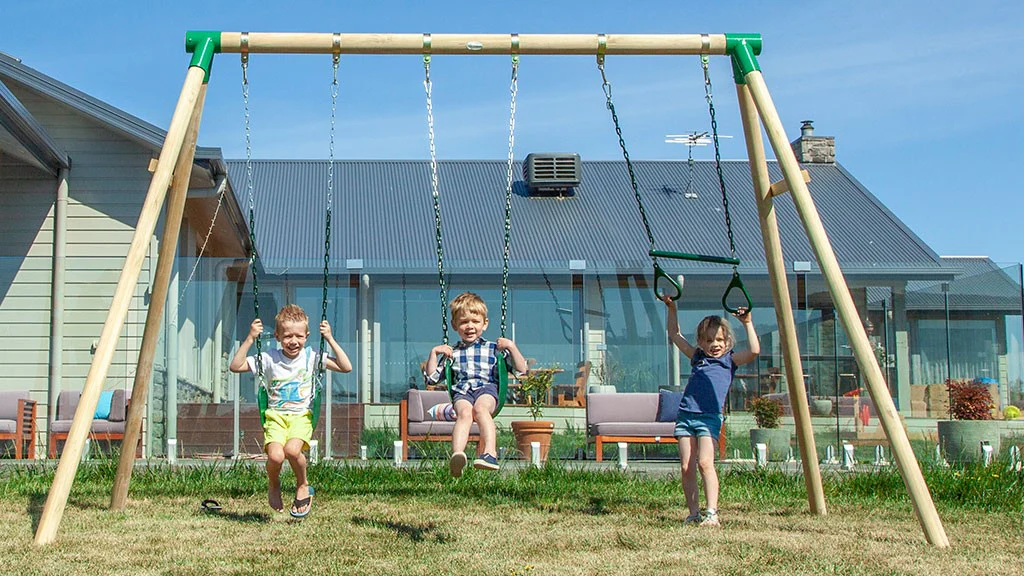
A backyard swing can look harmless until the ground under it starts telling a different story. One rainy week, one loose anchor, one low spot under a leg, and the whole play area begins to feel less like a family upgrade and more like a bad bet. A good swing set foundation solves that problem before your kids ever climb the ladder. It gives the frame a steady base, helps control shifting, and makes the yard easier to maintain through summer storms, freeze-thaw cycles, and heavy weekend use.
Most American backyards were not shaped with play equipment in mind. They slope toward fences, dip near tree roots, hold water after a storm, or hide soft soil under a thin green lawn. That does not mean you need a contractor for every setup. It means you need to read the ground before you build on it.
Parents often spend more time comparing slides and swing belts than studying the soil beneath them. That is backwards. The base decides how safe the set feels after the first month, not the product photo on the box. For more practical home project thinking, trusted home improvement resources can help you frame the job with the same care you would give any outdoor structure.
Choose a Swing Set Foundation That Fits Your Yard, Not the Box Photo
The best base is rarely the one that looks neatest on day one. It is the one that matches your soil, slope, drainage, and how hard your kids will use the set. A compact suburban lawn in Ohio, a sandy Florida yard, and a clay-heavy Texas backyard all ask for different decisions.
Why level ground still needs deeper attention
Level ground can fool you. A lawn may look flat from the patio, yet still hide soft pockets where old roots decayed or where rain collects after every storm. Set a playset there, and the first problem may not show up until one leg sinks half an inch lower than the others.
A better test starts after rain. Walk the area the next day and look for muddy patches, shiny wet soil, or grass that stays darker than the rest of the yard. Those spots tell you where weight may settle unevenly. A swing set puts repeated motion into the ground, so small weaknesses grow faster than they would under a bench or garden box.
The counterintuitive move is to avoid chasing perfect flatness first. Drainage comes before cosmetic leveling. A flat wet spot is worse than a slight dry slope because water softens the base every time the yard gets soaked.
When soil type changes the whole plan
Soil decides how much forgiveness your base has. Clay soil holds water and moves when seasons change. Sandy soil drains fast but can shift under pressure. Loamy soil is easier to work with, yet it still needs firm compaction before any frame sits on it.
A family in Georgia with red clay may need extra attention around drainage and anchoring because the ground swells and shrinks. A homeowner in Arizona may fight loose, dry surface material instead. Same playset. Different behavior under the legs.
Good playset base preparation starts with removing loose grass and organic debris from the contact points. Grass feels soft and friendly, but it decomposes under pressure. Once that layer breaks down, the frame can tilt. Scraping down to firm mineral soil may feel like extra work, but it prevents the slow wobble that makes a new set feel old by Labor Day.
Ground-Level Base Choices That Keep the Frame Steady
A backyard play structure does not always need concrete piers or a heavy construction project. Many families get solid results from compacted soil, gravel pads, or framed bases when the yard conditions are right. The trick is knowing what each option does well and where it fails.
Compacted soil works only when drainage behaves
Compacted soil is the simplest base, but it is not a shortcut. It works best on naturally firm ground with a mild slope that sends water away from the play area. The work happens before assembly: strip the grass, check the grade, tamp the soil, and recheck the frame contact points.
This option suits smaller wood or metal sets in yards that already drain well. It is also easier to repair because you can lift a low spot, add soil, and tamp again. The downside is maintenance. Soil moves with weather, feet, and time.
A smart homeowner checks the legs after the first few storms instead of assuming the job is finished. If one corner starts to sink, correct it early. Waiting until the beam leans creates stress on hardware, brackets, and swing motion.
Gravel pads help when water is the enemy
Gravel earns its place in yards that hold moisture. A shallow, compacted gravel pad under each support point can improve drainage and reduce direct wood contact with damp soil. It does not make the swing area soft for falls, so it belongs under support zones, not as the main landing surface for children.
The mistake is spreading loose gravel across the whole play area and calling it done. Loose stone can roll under shoes, scatter into grass, and create hard impact spots. That is not a kid-friendly surface. Gravel works best as a hidden drainage layer or a firm pad under structural contact points.
This is where swing set anchoring matters. A frame sitting on gravel without secure anchors can still move under repeated swinging. The base and anchor system should work together. One handles weight and drainage; the other resists lift, sway, and side force.
Anchors, Footings, and Borders Turn a Base Into a System
A base alone does not keep a playset safe. The structure needs restraint, the surface needs boundaries, and the yard needs a plan for movement. Once children start pumping swings hard, the frame deals with forces that a static garden shed never sees.
Ground anchors handle motion, not decoration
Anchors are not accessories. They are part of the safety system. A swing frame can rock, lift, or creep across the surface when the ground is soft or the set is heavily used. Anchors reduce that movement by tying the frame into the ground.
Different sets call for different anchor styles. Some kits use corkscrew anchors, some use stakes, and heavier wood frames may call for brackets or deeper footing hardware. Manufacturer instructions should guide the exact choice because frame design affects anchor placement.
The U.S. Consumer Product Safety Commission advises protective surfacing under and around home playground equipment and gives swing-specific guidance for surfacing distance in front of and behind to-fro swings. That matters because anchoring the frame does not soften a fall. It only helps control the structure.
Concrete footings help heavy sets but punish bad placement
Concrete feels permanent, and that is both its strength and its risk. For larger wood playsets, properly placed footings can keep support posts stable through years of weather. Poorly placed concrete can lock a frame into the wrong position and make future adjustment harder.
A footing should not create a hard exposed hazard in the play zone. If concrete is used, it should sit below grade or be covered according to the set plan and surface design. Children should not land on it, trip over it, or hit it during play.
The unexpected issue is that concrete can solve one problem while creating another. A post may stay firm, but water can still pool around the footing if grading is wrong. That trapped moisture can shorten the life of nearby wood and make the surrounding soil soft.
A proper safe playground surface has to sit above this structural thinking. Impact material belongs where children land, jump, and fall. Structural footings belong below or outside that impact path.
Surface Materials Decide How the Play Area Feels Every Day
Parents often treat surface material as the final cosmetic layer. That is a mistake. The surface affects falls, drainage, weeds, maintenance, insects, and how much dirt gets tracked back into the house. It also shapes whether kids keep using the space or drift away from it.
Mulch, engineered wood fiber, and rubber each trade one problem for another
Wood mulch looks natural and fits many yards, but ordinary landscape mulch is not the same as playground-grade material. Engineered wood fiber is made for play areas and packs into a more stable surface when installed at the right depth. It still needs topping up because weather and foot traffic break it down.
Rubber mulch lasts longer and drains well, but it can get hot in strong sun. In parts of the Southwest, that heat matters. A shaded yard in Pennsylvania may handle it better than a full-sun yard in Phoenix. Material choice should follow climate, not trend.
ASTM F1292 addresses impact attenuation and critical fall height for playground surfacing materials under lab conditions. For a homeowner, the plain lesson is simple: the surface under a playset should be chosen for fall protection, not only appearance.
Borders keep the material where safety needs it
Loose surfacing only works when it stays in the right place. Kids drag it with shoes, rain pushes it downhill, and mowing blows edges into the lawn. A border helps hold the landing zone together.
Timber, composite edging, or low-profile plastic borders can all work when installed cleanly. The border should not create a sharp trip point near the main movement paths. It should contain the material without becoming the next thing a child falls against.
A well-planned backyard play area has zones. The swing path needs deeper attention than the quiet space behind a ladder. The entry path needs firm footing. The maintenance edge needs enough space for a rake, blower, or mower. That planning keeps the surface useful after the first exciting week fades.
Long-Term Safety Comes From Inspection, Not One Perfect Build Day
No outdoor playset stays exactly as installed. Weather changes soil. Kids loosen surface material. Wood shrinks. Metal hardware responds to temperature. Safety is not a one-day achievement; it is a habit built into yard care.
Seasonal checks catch small failures early
Spring is the best time for a full inspection in much of the United States. Freeze-thaw cycles can lift anchors, shift soil, and expose low spots. In warmer states, heavy rain seasons may cause the same kind of movement without winter frost.
Check the frame after storms, not only before birthday parties. Look for legs that no longer sit evenly, anchors that have loosened, mulch that has thinned under swings, and water that collects around support areas. These are early warnings.
The quiet danger is familiarity. Once the set becomes part of the yard, adults stop seeing it. Kids still test it every day. A five-minute walkaround once a month can catch what casual glances miss.
Maintenance should be easy enough that you actually do it
A perfect design that is hard to maintain will fail in real life. Parents are busy. Lawns grow. Weekends disappear. The best setup is one you can inspect, rake, and correct without turning every check into a project.
Keep a small reserve of surface material nearby if your setup uses loose fill. Mark the ideal depth on a hidden stake or inside border so you can see when the surface has dropped. Take photos after installation, then compare them every few months.
Good swing set anchoring also needs a maintenance rhythm. Tight hardware, steady legs, and firm anchors should all be part of the same check. None of these steps feel dramatic, which is exactly why they work.
The goal is not to build fear into the yard. It is to remove the dumb risks so play can stay loud, messy, and free.
Frequently Asked Questions
What is the best foundation for a backyard swing set?
The best choice depends on your yard’s soil, slope, and drainage. Firm compacted soil can work for smaller sets, while gravel pads or concrete footings may suit heavier frames. The safest setup also includes proper anchors and impact-absorbing surface material around the play zone.
Can I put a swing set directly on grass?
Grass is not ideal under a playset because it wears away, turns muddy, and hides uneven settling. A small set may sit on grass at first, but you should still level the support points, anchor the frame, and add safer surface material where children land.
How level does the ground need to be for a swing set?
The support points should sit level enough that the frame does not lean, rock, or twist during play. A slight yard slope can be managed, but each leg needs firm contact. Never try to “fix” a major slope by forcing the frame into position.
Should a backyard swing set be anchored into the ground?
Yes, most swing sets should be anchored because swinging creates lift and side force. Anchors help stop the frame from shifting, tipping, or creeping across the yard. Always follow the manufacturer’s instructions because anchor type and placement depend on the frame design.
Is concrete safe under a swing set?
Concrete should never be the exposed landing surface under a swing set. It may be used below grade for footings on some heavy structures, but children need impact-absorbing material above and around play zones. Hard surfaces increase injury risk during falls.
What surface material is safest under swings?
Playground-rated loose fill, engineered wood fiber, rubber mulch, or approved poured surfaces can all work when installed at the right depth and maintained. The safest choice is the one rated for the equipment height, suited to your climate, and kept evenly distributed.
How far should protective surfacing extend around swings?
Protective surfacing should extend beyond the frame and into the swing path. For belt swings, the front and back zones need extra distance because children move outward while swinging. Use the manufacturer’s guidance and CPSC recommendations when planning the full surface area.
How often should I inspect a backyard playset foundation?
Inspect it monthly during active use and after major storms. Check for sinking legs, loose anchors, exposed hard spots, thin surface material, standing water, and frame movement. A quick routine catches small problems before they become repairs or safety concerns.